Friday, June 3, 2011


What is the difference between retreat and vacation?

In a word, intention.

When we travel on vacation, we have intentions like seeing family, sightseeing, eating at amazing restaurants and/or rest and relaxation. The intention for a retreat is PRACTICE.


The practice of concentration on a single subject (or the use of one technique) is the best way to prevent the obstacles and their accompaniments.

Yoga Sutras 1.32

Then Patanjali goes on to speak of the many ways and techniques to practice concentration and therefore quiet the mind....

Or by concentrating on subtle sense perceptions can cause steadiness of mind.

Yoga Sutras 1.35


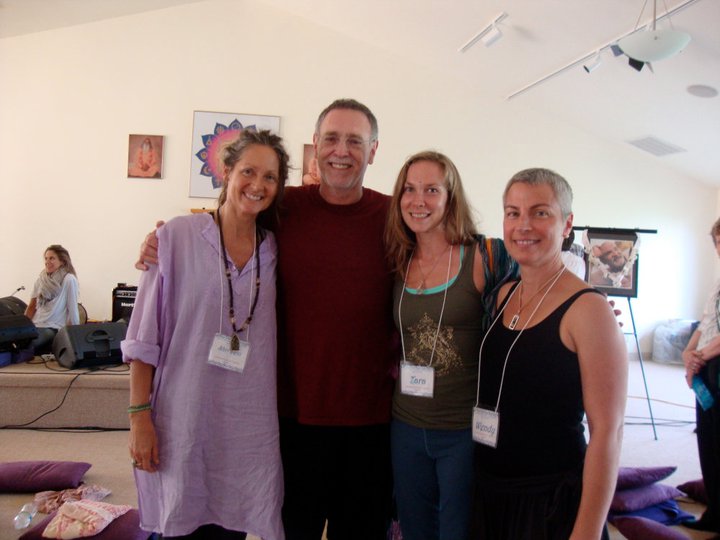
Over the holiday weekend, a group of Yogis from Bliss travelled to Satchidananda Ashram in Yogaville (really!), Virginia. We were there to learn and practice concentrating on subtle sense perceptions with world famous kirtan wallah Krishna Das. The practice of kirtan might seem like playing music and singing along but it is one of the ways Yogis can cultivate a quiet mind by focusing on divine sound vibration. Over the weekend, we were scheduled to practice kirtan 14 hours with KD. Even with time for question and answer and potty breaks, that is an impressive duration for sustained practice time.

I say that Yogaville is beautiful but not because it is the most beautiful place I have ever seen, but because the experience is beautiful and the environment facilitates a beautiful experience. Ashrams or Yoga retreat centers traditionally are spartan, not too fancy but clean and spacious nestled in a natural setting (no tvs or phones in rooms). The scriptures talk specifically about being close to nature when doing serious practice. The food is amazing, not because it is the best food I have ever had, but because it is delicious in a way that does not over indulge the senses and it sets the foundation for the state of meditation to happen. I have worked in the kitchen as a volunteer and prayers are said all day long to bless the food and much of the food comes from their very own organic garden. The food is satvic- pure, light and simple.

Making time for extra practice has its rewards. Almost always, the body and mind feel rejuvenated and a new insight comes.

Thursday, May 19, 2011

Memorial Day Holiday Schedule

Memorial Day Holiday Schedule:
Monday, May 30: 9 am Open Level Flow with Padma, (no 6 pm class that night)

Bliss Yoga Class Photo Shoot


To look at photos by Ingrid Damiani from the Bliss Yoga class photo shoot go to:


You may contact Ingrid directly to order and pay for any shots you would like.


Thursday, April 21, 2011

Easter Sunday 2011

Sherri will be teaching her regular Sunday 11 am class this weekend Easter Day. Join her- everyBUNNYS gonna be there!

Tuesday, April 5, 2011

The Root Lock

The Root Lock in Vinyasa Yoga is called Mula Bandha. There are many bandhas or locks that we practice in Yoga- the hand lock- hasta bandha, the foot lock- paddha bandha, the chin lock- jalandhara bandha, the belly lock- uddiyana bandha, the mental lock- chitta bandha- all locks imply some elevation and/or lift, physically and energetically. The word lock is somewhat misleading- really by practicing the locks we are able to unlock forces and begin to use them consciously. The locks build energetic bridges that facilitate growth, healing and empowerment. Classical Yoga is not a philosophy which focuses on energy. There is no talk in the Yoga Sutras of Patanjali about prana, kundalini or chakras- the Sutras are about the many ways to quiet the mind. Hatha Yoga comes to us from Classical Yoga. It is the practice of asana, pranayama and conscious relaxation- some traditions add seated meditation. When we practice Hatha Yoga with bandhas, we are adding a Tantric element- the manipulation of energy. I believe the Tantric path to be an accelerated spiritual path so for me the bandhas are of utmost importance. Even, arguably, more important than a focus on breath because by the practice of bandha, pure breathing comes naturally. Many Yoga teacher unfortunately do not have a clear understanding of the technique themselves nor an understanding of its importance so they cannot instruct what they do not know or practice. The outcome of a successful bandha practice is a body that is both strong and light- if we jump in our asana practice, the jumps begin to have less sound as we begin to land with more and more control. Emotionally we find that we are more resilient and steadier in the midst of change. Physically and energetically mula bandha is a mechanism of lift in the pelvic floor. Specifically, it is a lift at the cervix in women and lift at the perineum in men, but in the beginning, maybe even the first several years of serious practice, we may lift the muscles of the pelvic floor and even the contract the anal sphincter as well. Mula bandha is an activation of the trigger point to awaken Muladhara Chakra- the root energy center. There is a relationship between Muladhara Chakra and Ajna Chakra, the 3rd eye energy center, so when we awaken the root chakra the 3rd eye chakra begins to awaken as well. The root center is about material world balance- feeling safe, dealing with fear, anxiety, worry, prosperity, greed, addictions and having a strong foundation in life with a living space that nurtures us and a meaningful career with positive karmic consequences. The 3rd eye center is about clarity of vision, purpose, intuition, awareness and developing a perspective on reality that is more accurate. So the awakening of both centers simultaneously is a powerful push toward often radical life changes- we begin to see with more clarity the toxic nature of some jobs, relationships and living environments and find the power (fire) to take action. One student of mine used to own a bar and now has a body work practice- this is a sign of both energy centers awakening. Kundalini Shakti is the dormant creative force that is inherent in each of us. A force that, when awakened, enables humans to reach their greatest potential. Kunda means fire place- kundalini shakti is a dormant fire place nestled in the groove of the sacrum- the sacred bone in the hips. The plan to awaken Kundalini Shakti in Tantra is to build fire, energy, in the first 3 energy centers- root center, sexual center and navel center. If we can stoke these fires sufficiently the heat will awaken Kundalini from her celestial slumber. By the practice of mula bandha, Yogis set the stage for the awakening of this great creative force that is the mechanism of enlightenment. There are nerves in the sacrum that instigate the lift in the pelvic floor when we perform mula bandha. There are only 2 places in the spine where parasympathetic nervous system fibers are present- the sacrum and the neck. The parasympathetic nervous system is responsible for the relaxation response in the body. When we perform mula bandha we evoke the relaxation response and the result is a huge release of muscular and mental tension. Not only does the physical body become light from mula bandha practice, we find that emotionally we feel lighter with this letting go of tension on a regular basis. The Yogic texts tell us that there are 72,000 nadis, or lines of energy, in the human body. (Some texts say more.) We are told that the point of origin for every single line of energy is in the pelvic floor. Physical work affects the pranic body and energetic work affects the physical body. When we engage mula bandha we stimulate all the energy lines in our body and the result is a more vibrant energetic field and the cultivation of radiant physical health. Mula Bandha was formerly a closely guarded secret technique that was taught only to experienced Yogis. It is only in recent history that this technique is now common knowledge, part of the public domain of information via books and the Internet and Yoga teachers now give even beginning students instruction in the technique. Everything is perfect, there are no accidents- it seems as though humans are ready for mula bandha practice en mass. We, my friends, do indeed live in interesting times.

Tuesday, March 29, 2011

A New Perspective on Aging


There was an experiment in Boston recently where the participants, who were all over the age of 75, were taken to a retreat center outside the city for one week. The retreat center was made to look like a building from the 1950's- the furnishings were from the 50's, the clothing the participants wore was from the 50's, the music they listened to, the movies they watched and the books and magazines they read were all from the 1950's. After one week, nearly all of the participants had dramatically reversed their biological markers for aging. No change in diet, no change in exercise- just the mental cue to their bodies to be as they were in the 50's and remarkably, they were!

The biological markers for aging are: bone density, fat content in the body, cardiovascular health, strength and flexibility thresholds, vision and hearing thresholds and quantities of sexual hormones in the body. All the newest studies show conclusively that every single one of these markers can be reversed! In studies where diet and exercise were added with the mental component, the results are even more dramatic: researchers were able to create biological markers in 75 year olds that were equal to that of the average 25 year old. The big lesson here is to change the way we think about aging. It is very possible to age joyfully and gracefully.


Nothing ages our bodies more rapidly than stress- studies show it makes us age 10 times faster. If we look to the animal kingdom- if a gazelle has a stressful encounter with a lion and survives the encounter, immediately the gazelle goes to take a deep rest to recover. What do humans do after a stressful day at the office? Most of us just keep going, doing it all over again the next day. The regular experience of the down regulation of the nervous system, the relaxation response, is absolutely necessary for optimal health, graceful aging and to counter the periods of up regulation- the stress response. The practice of Yoga, particularly a practice with an emphasis on the Yogic Sleep Meditation at the end, is a very efficient means of managing stress and evoking the relaxation response. When the body is relaxed it has energy to send to "non essential" tasks like anti aging and cellular repair and healing.

Under the microscope, it is nearly impossible to tell the difference between the muscle of a 20 year old and the muscle of a 70 year old, but where we do see dramatic difference is in the joints. Weight bearing work, like in the standing poses of Yoga, is amazing for putting a little stress of the bones to trigger new growth while still protecting the joints. Joints crave fluid movement and flowing Yoga sun salutations are very therapeutic for the joints.

In the animal kingdom those animals with slower breathing patterns, like turtles, tend to live longer. Yoga teaches us the same principle- if we can slow down our breathing patterns on a regular basis, we can increase our lifespan and have more time to work out karmic debt and to perform spiritual sadhana.

In the experiment with the 75 year olds who spent the week remembering how they were in the 1950's, we saw a change in their physical bodies in the present. Remembering the past can make physiological changes in the present. Use this wisdom to your advantage in your Yogic sleep meditation- if there is a physical issue that you are trying to heal or manage with your Yoga practice it would be beneficial to remember a time from the past before that issue was present and see yourself performing activities then that are not possible now. In your meditation experience the past fully- remember the sounds, sights, tastes and fragrances of the past.


This is an exciting time to be human on planet Earth. The later years of life are a natural time to focus more on spiritual practice and selfless service- our kids are getting older and more independent, our debts are getting smaller and we often have more free time as we work less. Aging can be a joyful transformation and the last part of our life can be just as dynamic and meaningful as the first.

Monday, March 14, 2011

Paradox

I recently read an article about the seeming paradoxes found in highly creative people. There is a paradox between rest and activity. Creative types can remain intensely focused for long periods of time expending enormous amounts of energy on their discipline of choice and most report doing some type of physical activity on a regular basis. Yet, they also report spending long durations of time chilling out, doing nothing, resting and contemplating. Creative types are extroverted and love being on stage and being the center of attention. Yet, they also have periods of hermit like isolation and solitude. I am one of these types and I understand well the many faces and polarities of the personalities of creative artists. The paradoxes seem absolutely necessary for me. The activity and extroversion are facilitated by the resting and solitude.

Amit Goswami, a retired professor of quantum mechanics and a mystic, says that most people desire one polarity over the over- the act of doing or the act of being. Rather than being a type who likes to do, do, do or either a type who like to be, be, be- Amit says we are happier, like the artist, if we enjoy the dance of both- do be, do be, do be- some time spent doing and some time spent just being.

In Yoga, we ask you to build physical shapes, asanas, and in those shapes to engage opposing muscles groups in a balanced way. We say engage and enliven the muscles that you can. Yet, we also say relax and be calm and peaceful as you do this. These are seeming paradoxes. Yet, again the quiet mind we cultivate in Yoga actually facilitates the balancing of the forces in the pose. It is only when we are calm and peaceful that we able to explore the most physically demanding poses or sequences.

Find your Sthira- strength and stability in the pose. And find your Sukkha- comfort and ease. Enjoy the dance.
Do be do be do be!